The intelligent organizational chart
Model your organizational charts, even complex ones, for visual and dynamic management of your organizations.
ROK is not a traditional organizational chart tool.
It is a living organizational chart, synchronized with the reality of your company.
Customer proof
Novares manages its international organization with ROK
6,000 employees · 23 countries · HR validation in 24 hours · Organizational chart synchronized with real movements.
The digital twin
of your organization
Model and maintain complex organizational charts, with continuous alignment with your HRIS and directories.
1
Model
Internal and multi-entity organizational charts, regardless of their level of complexity.
2
Track in real time
Internal movements, arrivals, departures: your organizational chart reflects the organization as it really is.
3
Integrate
Bidirectional synchronization with your HRIS and your company directories.
Model
your organizations and your ecosystem
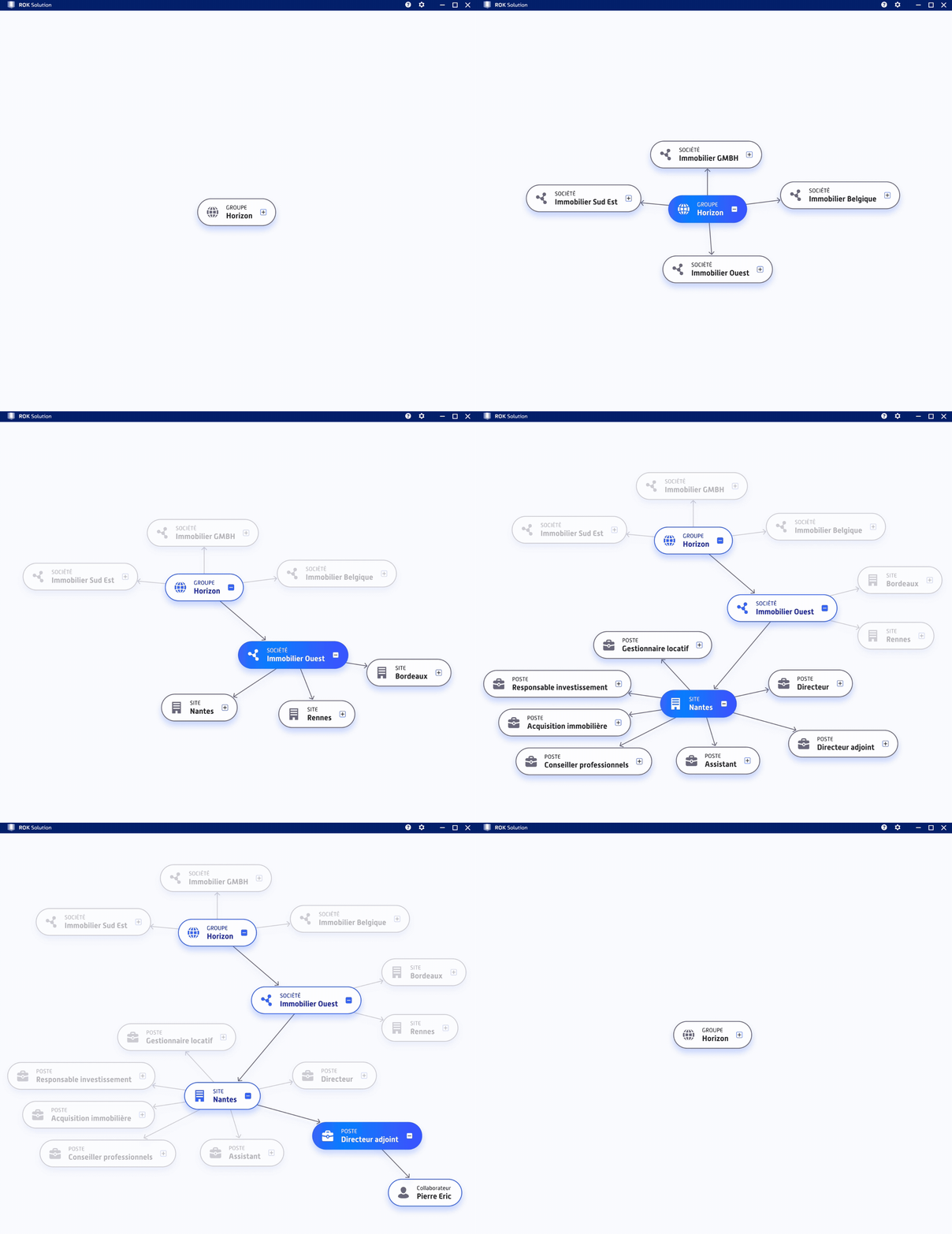
Subsidiaries, partners, service providers, governance bodies: ROK allows you to model your entire ecosystem, both internal and external, in a single environment.
Two distinct uses. One single tool. |
Modeling
Modeling is done from a workstation. It is the act of structuring: creating entities, defining relationships, editing the hierarchy, configuring positions. A foundational task carried out by HR teams or administrators.
Visualization
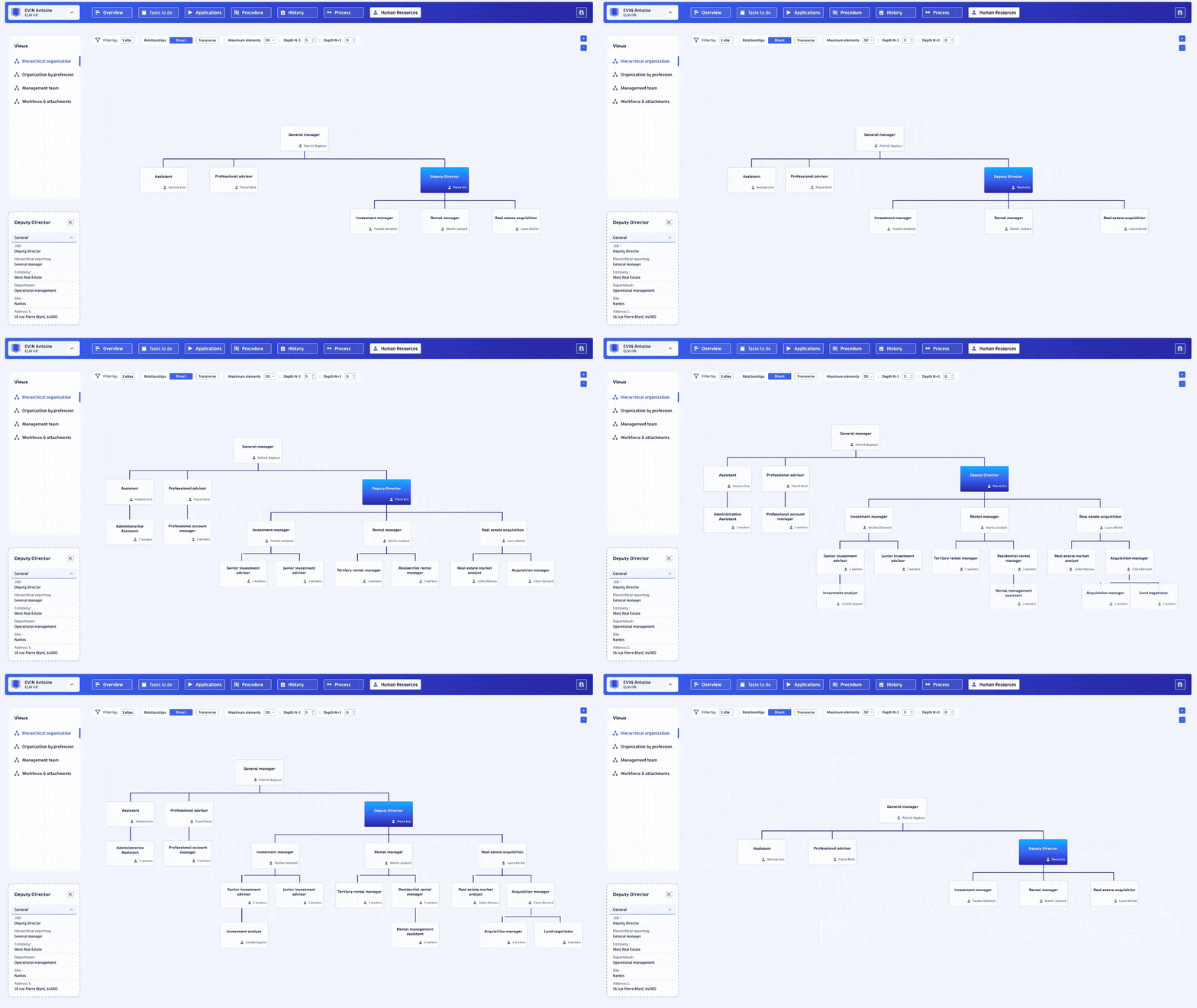
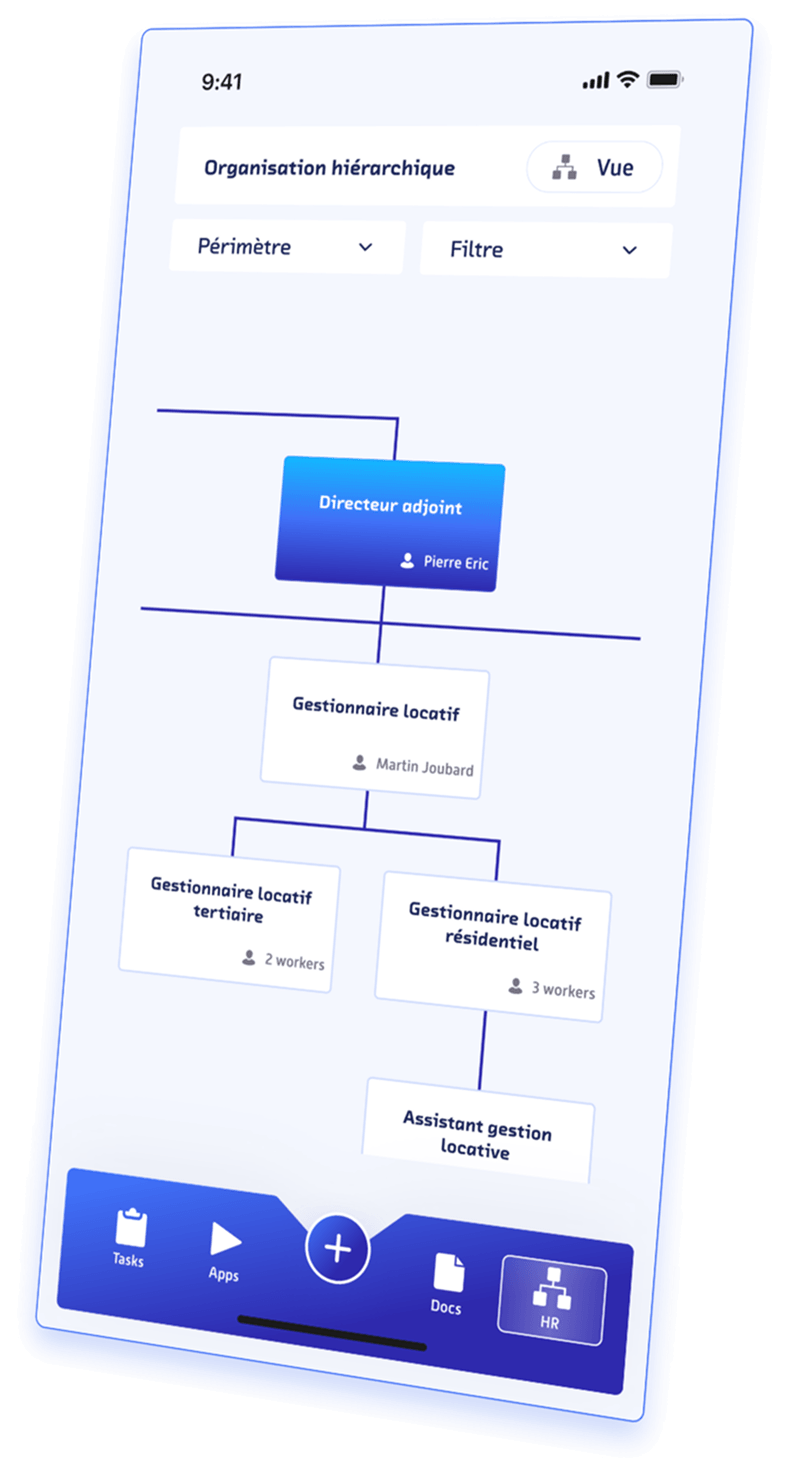
Visualization, on the other hand, is atawadac (any time, anywhere, any device, any content). Once the organizational chart is modeled and maintained, it can be accessed by all authorized employees, from any device, at any time.
A dynamic organizational chart,
connected to your tools
The organization evolves. Your organizational chart does too.
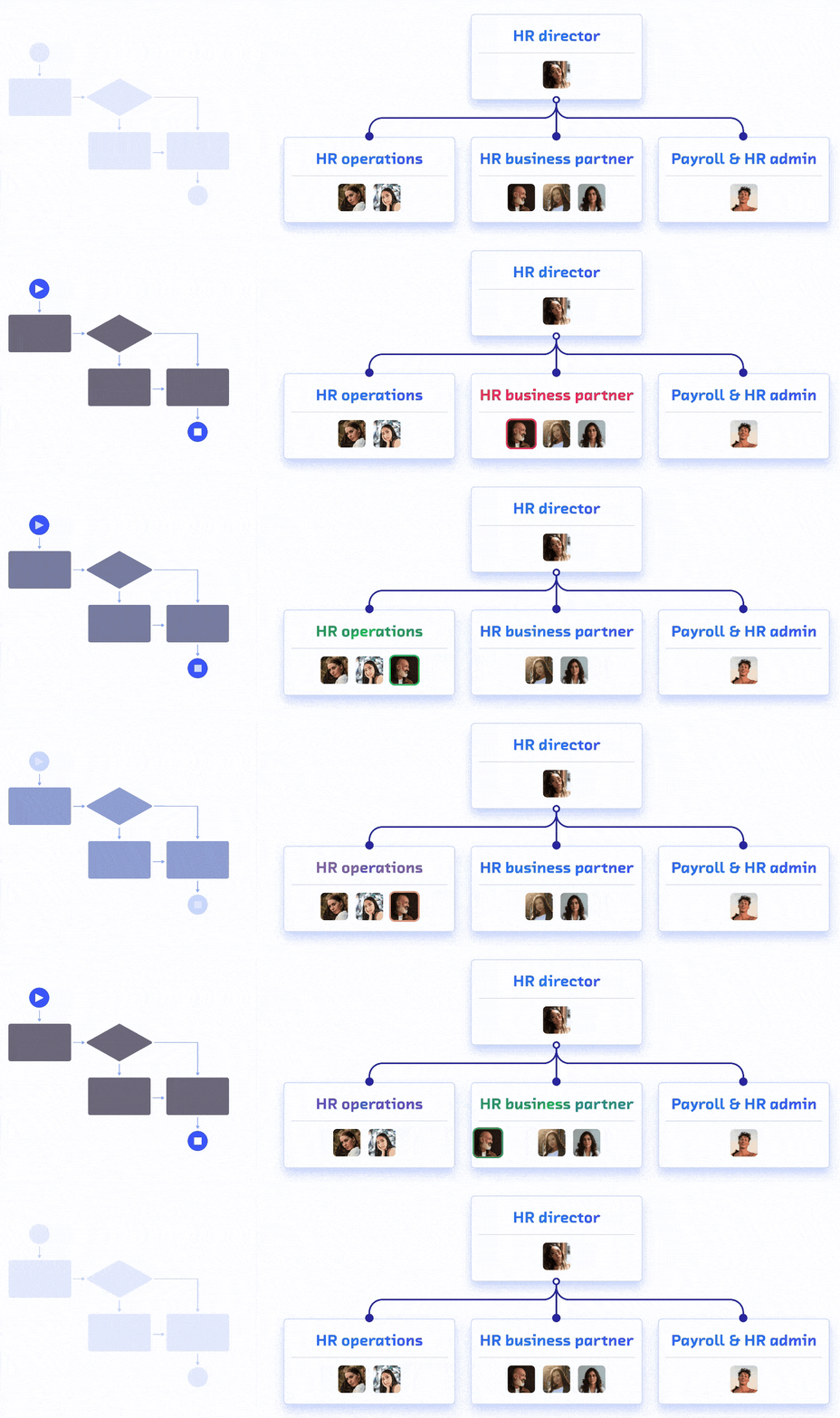
Static organizational charts are obsolete as soon as they are published. In a constantly changing company, manually maintaining the organizational structure leads to errors, delays, and a lack of visibility.
ROK captures movements in real time and automatically propagates them through its native workflows. Every event, arrival, departure, transfer, triggers an update of the organizational chart without manual intervention.
IN
Arrivals
Every new employee is integrated into the org chart as soon as they are onboarded.
MOVE
Internal transfers
Mobility and reporting line changes are reflected instantly.
OUT
Departures
Offboarding updates the structure automatically, without manual action.
The position profile:
much more than a title
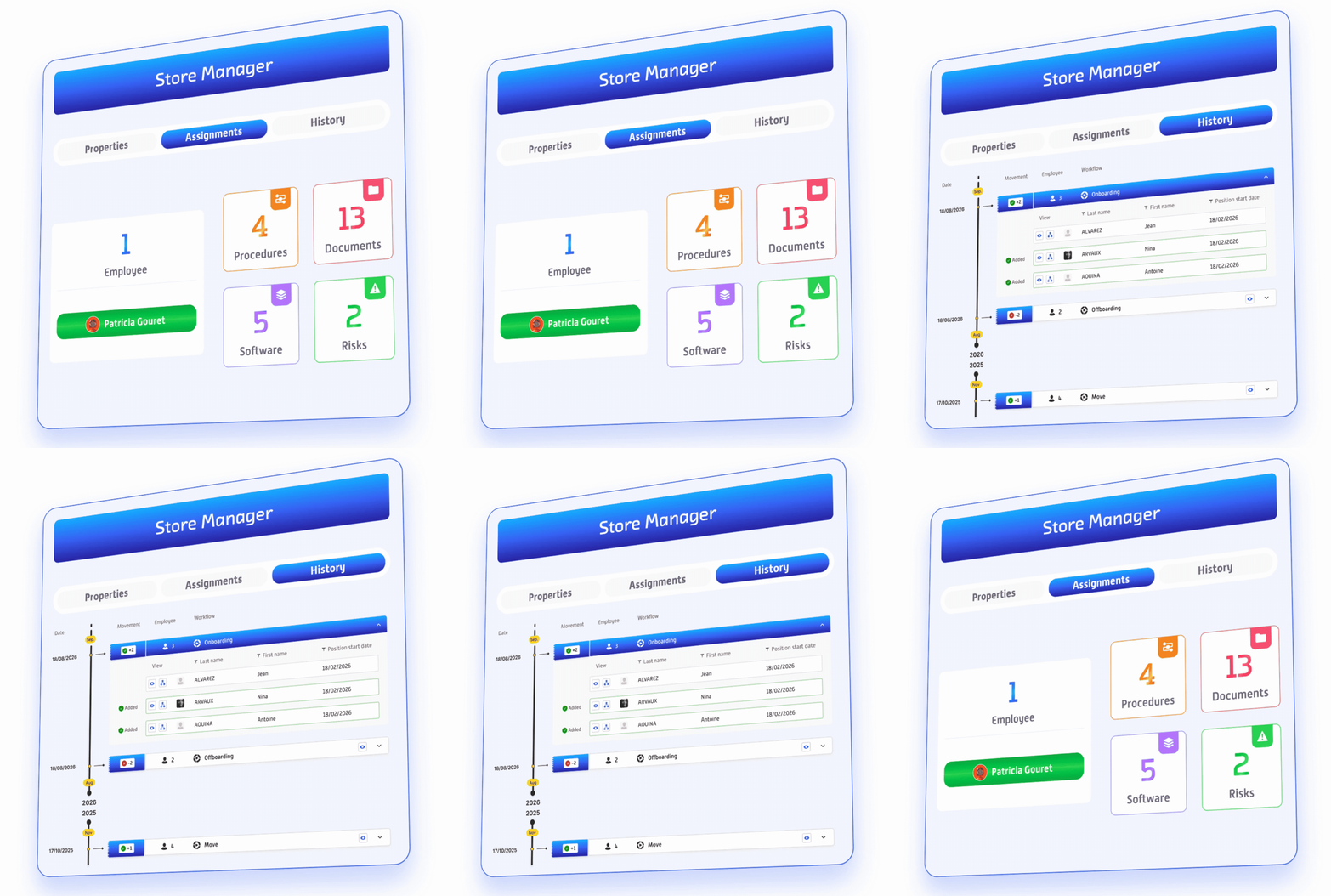
What a ROK position profile contains
The position’s place within the hierarchy and its reporting lines.
The employee occupying the position and their mobility history.
Rights and access linked to the business processes associated with the position.
Risks, tasks and documentation (DMS) attached to it.
Bidirectional integration
with your HRIS and directories
Two integration modes. One single tool. |
HRIS
↔ ↔
↕ ↕
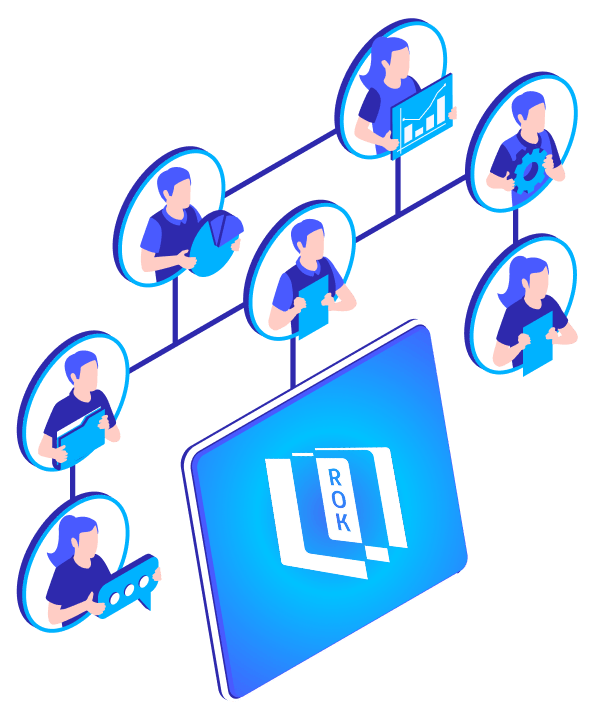
ROK
↔ ↔
↕ ↕

Directories
Mode 1
The HRIS drives ROK
The movements declared in your HRIS automatically feed ROK. The organizational chart is updated without manual intervention.
Mode 2
ROK drives the HRIS
Changes made in ROK trigger workflows that propagate updates to the HRIS and directories.
Interoperability
ROK is interoperable with the leading HRIS on the market: SAP HR, Workday, and all enterprise directory solutions.
Integration relies on standard connectors, without any specific development.
Model any type of organization,
even complex ones

Conventional
Traditional hierarchical structure, subsidiaries, business units.
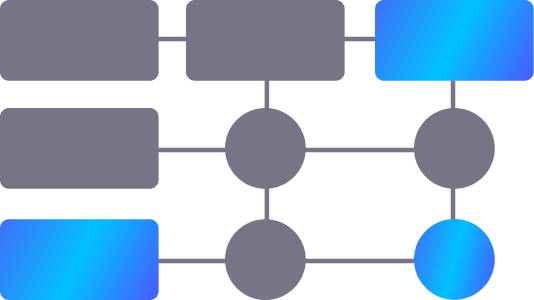
Matrix
Dual reporting, cross-functional project teams, shared governance.
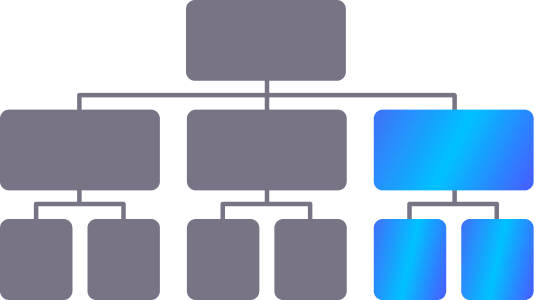
Hybrid
Mixed organizations integrating internal entities, partners and service providers.
Structuring your organization
with ROK
Novares example at an international scale.
Novares structured a complex international organization by relying on a dynamic organizational chart connected to its HR processes.
The company now benefits from an organization updated in real time, facilitating mobility and global coordination.
6.000
Employees
Global organization managed within a single system of record.
21
Countries
Centralized multi-site international structure.
24 h
HR validation
Processes reduced from several weeks to one day.
100 %
Up-to-date organization
Organizational chart continuously synchronized with real-world changes.
Call us to finally get an organizational chart that truly reflects your organization, at all times.
The organizational chart,
foundation of access governance
Modeling your organization is a first step.
ROK goes further: once your organizational charts are structured, the same platform allows you to manage who has access to what, based on each person’s roles and responsibilities.
When an employee changes position, their access rights automatically evolve. This is what ROK calls IGA — Identity Governance & Administration.
ROK Decoder
Your questions,
our answers
Managing organizational charts, roles, employee movements and HRIS integration raises key challenges: data reliability, real-time updates, organizational complexity and global visibility.
Here are the essential answers to understand how ROK turns your organization into a living and usable organizational chart.
What is an intelligent organizational chart in ROK?
A ROK organizational chart is much more than a static representation. It is a dynamic organizational chart, connected to your HRIS, your corporate directories and your business tools.
It helps you visualize:
- who is who
- who does what
- with which tools
- in which organizational context
Each element is updated automatically, turning the organizational chart into a digital twin of your organization, always aligned with reality.
How does ROK ensure that the organizational chart is always up to date?
ROK relies on employee movement workflows: onboarding, mobility and departures. These events automatically trigger updates to the organizational chart.
Each movement updates in real time:
- the organizational structure
- reporting lines
- responsibilities
The result: a real-time synchronized organizational chart, without manual intervention.
Can ROK handle complex organizations?
Yes. ROK is designed to model organizations that are:
- multi-entity
- multi-company
- matrix-based
- hybrid, including internal entities, partners and external providers
You can represent classic hierarchies, cross-functional relationships, project structures and extended ecosystems.
The organizational chart becomes a complete map of your organization and ecosystem.
What is the difference between modeling and visualization?
ROK separates two complementary uses.
Modeling is carried out by HR teams or administrators. It is used to structure the organization: create entities, define reporting lines, edit the hierarchy and configure positions.
Visualization is available to authorized employees in ATAWADAC mode: any time, anywhere, any device, any content.
This makes it possible to build a reliable foundation, then share it widely through a clear, accessible and usable organizational chart.
What does a position profile contain in ROK?
In ROK, the position profile is a central node of the organization.
It includes:
- the position in the hierarchy
- associated reporting lines
- the employee occupying the position
- mobility history
- business responsibilities
- process-related rights
- associated risks, tasks and documents
This approach connects the organization to operations and turns each position into an activity management point.
How does ROK integrate with the HRIS and corporate directories?
ROK provides bidirectional integration with your information system.
Two modes are possible:
- HRIS to ROK: movements declared in the HRIS automatically feed the organizational chart.
- ROK to HRIS and corporate directories: changes made in ROK trigger workflows that propagate updates to the information system.
Connections rely on APIs, web services and standard connectors.
ROK therefore becomes an organizational source of truth connected to your information system.
Does ROK complement a corporate directory?
ROK does not replace your corporate directory: it enriches it with a dynamic organizational view.
Where a traditional directory lists users, ROK allows you to visualize hierarchical and cross-functional relationships, place employees in the context of business processes, and associate applications, documents and responsibilities with the organization.
You move from a simple directory to a 360° view of your organization.
Why connect the organizational chart and No-Code in the same platform?
ROK connects the organization to the processes.
No-Code applications rely on the organizational chart to:
- assign responsibilities
- trigger actions
- manage flows
- maintain consistency between positions and processes
This makes it possible to design applications aligned with operational reality, with consistency between organization, processes and execution.
How does ROK manage roles and responsibilities?
ROK distinguishes between organizational roles, business responsibilities and the information attached to each position.
Through the concept of position, ROK connects the following elements in a single model:
- place in the organization
- associated responsibilities
- related processes
- attached documents, risks and tasks
This approach makes it easier to understand who does what, in which context, and with which operational responsibilities.
Can the organizational chart be easily viewed, filtered and used?
Yes. ROK allows you to browse the organizational chart through several dimensions: entity, company, site, department, function, business unit or project team.
You can visualize hierarchical relationships, cross-functional links and the reporting lines that matter to your organization.
The organizational chart becomes a clear, shareable and usable resource, far beyond a static diagram.
Can ROK help manage the entire organization?
Yes. ROK acts as an organizational control tower.
It allows you to:
- track movements
- understand responsibilities
- visualize interactions
- maintain overall consistency
- access a reliable and up-to-date view of the organization
You gain a centralized, reliable and real-time view of your organization.
Is ROK suitable for all companies?
ROK is a cloud, multi-entity and scalable platform.
It adapts to:
- structured companies
- international groups
- multi-company organizations
- complex environments involving subsidiaries, partners and external providers
The goal is simple: to provide a reliable, living and usable organizational chart, whatever the size or complexity of your organization.
Let’s get started. Right now.
Learn more: Organizational chart management
Organizational chart and identity management: structure and visualize your organization efficiently
Organizational chart management has become a strategic lever for companies seeking agility, security, and performance. It allows for efficient structuring of roles, teams, and internal flows while providing a clear representation of hierarchies and responsibilities. This organizational mapping is essential for visualizing functions, facilitating decision-making, and allocating resources in real time.
With a dynamic org chart, every manager can view the organizational hierarchy in a smooth and constantly updated way. Dynamic org chart updates automatically reflect internal changes such as new hires, departures, role changes, or reorganizations. This process is key to maintaining an up-to-date overview of the company and anticipating operational needs.
Employee flow management is also enhanced through seamless HRIS integration. By connecting HR tools to the organizational chart system, companies can orchestrate users, roles, and access rights with precision. This user and application orchestration contributes to IT access security, while reducing human error and administrative oversights. The solution also enables entity security and simplified access administration, while aligning talent management with strategic goals.
To go further with Hyperautomation (workflow orchestration, BPM, RPA, AI, no-code), this structural management component integrates naturally into a complete platform for process digitalization.
Organizational chart management for optimized role structuring and HR flows
Organizational chart management enables precise role structuring by aligning responsibilities with business processes. Through a graphical representation of teams, HR, managers, and IT departments gain an operational tool to understand who does what, where, and with which permissions. This supports clear governance and reinforces accountability across the organization.
Using HR dashboards facilitates real-time management of the workforce management platform. These structured data points also help trigger automated workflows that are essential for managing the employee lifecycle: onboarding, internal mobility, and offboarding. This leads to a simplified onboarding and offboarding process, which is key to organizational agility and security.
This organization benefits the Human Resources Information System (HRIS). It optimizes authorization management, simplifies role assignment in business applications, and ensures a coherent organizational architecture. This approach fits within a broader HR process optimization strategy, where clear visibility of structural interactions is a key performance driver.
Agile team management relies on effective visualization, fully connected to the organization’s application ecosystem.
Organizational chart management serving compliance and governance
Beyond the operational aspect, organizational chart management also contributes to compliance and risk control. It serves as a reference framework for conducting audits, assigning responsibilities, and justifying access rights. It is a solid foundation for automating audit processes and structuring the company’s critical roles.
Organizations can implement authorization management policies and document access rules through automated validation workflows. This dynamic governance promotes transparency and fits into a broader dynamic role governance strategy at the information system level. It also enables greater responsiveness to regulatory requirements by strengthening traceability.
The control dimension is further reinforced by analytical features. Effective organizational analysis helps identify duplicates, unnecessary access, or critical dependency areas. This visibility is crucial for anticipating risks related to change and aligning the organization with corporate strategy.
Internal audit automation and risk management naturally rely on this real-time organizational mapping.
In addition to these capabilities, organizational chart management is also part of a broader advanced optimization and automation approach with ROK Solution, providing a complete foundation to manage structure, users, and their interactions effectively.
Organizational chart management and HR automation: toward an autonomous and reliable organization
Organizational chart management is a fundamental lever for automating HR processes in a reliable, scalable, and sustainable way. It connects teams, roles, and access rights to all of the company’s tools within a HR automation logic. This automation ensures that every new employee immediately has the right access, and that rights are revoked as soon as someone leaves the organization.
Thanks to this synchronization with corporate directories, HR management tools can seamlessly manage the organizational hierarchy. This management occurs without workflow disruption or dependency on manual tasks. It is a decisive advantage to reduce errors, secure work environments, and meet the expectations of internal and external audits.
The benefits are also evident in terms of responsiveness. In the event of a merger, reorganization, or team movement, organizational chart management enables mass adjustments in just a few clicks, while maintaining consistency in the organizational structure. These changes are immediately visible through clear hierarchy visualization, simplifying decision-making.
Moreover, possible integrations with third-party systems pave the way for full automation of HR workflows. Every job change, team reassignment, or reporting line update can trigger automated actions within the information system: account creation, permission updates, access removal, notifications, archiving, and more.
This ability to automate flows directly contributes to smart management of human and technical resources. It reduces the administrative burden while increasing operational security. Organizations leveraging this architecture benefit from greater resilience in the face of unexpected events while maintaining a high level of compliance.